Showing posts with label displaced people. Show all posts

Saturday, July 12, 2014

143 have died in shelters since being displaced by Zamboanga City siege – report

GMA News Online
July 12, 2014 7:41pm

 Nearly 10 months after the failed siege on Zamboanga City, the death toll among residents forced to flee their homes and stay in evacuation centers continues to rise - reaching 143 this month, a Mindanao news site reported Saturday.

City Health Officer Dr. Rodelin Agbulos said this is the number of evacuees who died as of July 6, with pneumonia as the leading cause, MindaNews reported.

Agbulos said they are intensifying health services in response to this.

The report quoted Agbulos as saying 28 died from pneumonia while 23 died from acute gastroenteritis. Others died from asthma, measles, dengue and severe malnutrition.

He attributed the other deaths to at least 15 causes including asthma, measles, dengue and severe acute malnutrition.

But Agbulos said they are still determining the cause of 20 deaths, since “it was difficult for us to trace including the medical history since they were buried immediately.”

The report cited figures from the city government showing there are some 3,196 families or 17,009 people staying in five evacuation centers.

Some 1,579 families or 8,541 individuals are staying in six transitory sites.

In September 2013, followers of Moro National Liberation Front founding chairman Nur Misuari tried to occupy parts of the city, which government forces took back within the month.

Agbulos said the fatalities were staying at the transitory site in Sitio Masepla, Barangay Mampang, and at the evacuation centers in Talon-Talon Elementary School, Mayor Joaquin Enriquez Memorial Sports Complex and along the Cawa-Cawa shoreline.

Most of the mortalities were children aged below five, including 37 males and 35 females; followed by people above 60 including 16 males and 14 females. Joel Locsin/JDS, GMA News

Tuesday, May 10, 2011

US-Led "Humanitarian War" Left Many African Refugees Stranded in Mediterranean to Die

NATO ships, planes left African refugees stranded in Mediterranean to die
By Barry Grey
10 May 2011

The British Guardian newspaper published an investigative report Monday documenting the case of African refugees who were left to die in the early days of the war against Libya by NATO and European authorities who spotted their vessel drifting in the Mediterranean but made no effort to rescue them.

The newspaper, citing the account of survivors and an Eritrean priest in Rome who was one of the last people to communicate with the stranded boat, said the passengers were left to drift in open waters for 16 days, even though the Italian coastguard had been alerted and the vessel had been seen by a military helicopter and an aircraft carrier.

Only nine of the 72 people who boarded the boat in Tripoli on March 25 in a desperate attempt to reach the Italian island port of Lampedusa 180 miles northwest of the Libyan capital survived the ordeal. The others, including 20 women and two babies, died from thirst and starvation while on the boat or after beaching near Misrata on April 10.

click to read more

Thursday, April 28, 2011

Sabah:The Land Below the Wind

AlJazeera News
By Marga Ortigas in
April 28th, 2011


There’s no soft, spectacular sunset over Sabah this afternoon. No wisps of crimson, or feathery touches of pink.

Dusk is settling like a heavy orange yolk suffocating what’s already been an oppressive day.

The mackerel-coloured sea is choppy, leading the small boats moored around the harbour in a syncopated dance. Their lights begin to come on…looking like fallen stars twinkling on the bobbing cobalt ocean.

The boardwalk is now dipped in colourful neon, and the stalls in the waterfront market begin to raise their rainbow tents. They look like the large colourful sails of the traditional vintas from Zamboanga in the southern Philippines. It’s where many of the vendors originate from. No surprise then that’s it now known as the "Filipino market".

For many Filipinos – like the market vendors – looking to escape poverty and civil strife in the restive southern Philippines, Sabah is the promised land, despite being Malaysia's poorest province. Even the weather here is slightly better. The annual typhoon season that cuts through the Philippines doesn't hit Sabah that lies directly beneath it, giving it the monicker -- 'The Land Below the Wind'. The ideal place to seek shelter.

Hundreds of thousands of Filipinos first came as refugees fleeing a separatist war. A large number have now gained legal status. But the flow of people from the southern Philippines has only grown over the last 30 years.

The Malaysian Human Rights office estimates there are now close to two million illegal immigrants in Sabah -- more than the number of Malaysians themselves. And three-quarters of those migrants are reportedly from the Philippines, the majority of them "hiding" in plain sight.

click to read more

Tuesday, March 22, 2011

Israel Engaging in Ethnic Cleansing:UN

UN official: Israel engaging in ethnic cleansing

Investigator Richard Falk says settlement expansion, consequent evicting of Palestinians 'intolerable'

Reuters
Published: 03.21.11, 18:55 / Israel News

Israel's expansion of Jewish "settlements" in east Jerusalem and eviction of Palestinians from their homes there is a form of ethnic cleansing, a United Nations investigator said on Monday.


US academic Richard Falk was speaking to the UN Human Rights Council as it prepared to pass resolutions condemning Israeli behaviour on territory it has occupied since 1967.

The "continued pattern of settlement expansion in East Jerusalem combined with the forcible eviction of long-residing Palestinians are creating an intolerable situation" in the part of the city previously controlled by Jordan, he said.


This situation "can only be described in its cumulative impact as a form of ethnic cleansing," Falk declared.


Israel declines to deal with Falk or even allow him into the country, accusing him of bias against the Jewish state.


In a linked discussion on Israeli policies towards lands it seized in the 1967 Middle East War, Israeli and Palestinian delegates clashed over the recent murders of members of a Jewish settler family on the West Bank.


Israel's ambassador Aharon Leshno Yaar called on Palestinian leaders to condemn the March 11 murders of three children, including a baby, and their parents "without caveats or hedging" in Arabic to their own people.


Almost as shocking as the killings, "in the days following the massacre many Palestinians took to the streets celebrating the deaths of this family," Leshno Yaar said.


But Palestinian envoy Ibrahim Kraishi said the killings had already been condemned by the Palestinian Authority as "an act of terrorism" that was not part of his people's culture. "Rather, it is the culture of the occupying power," he added.

In his speech, Falk said he would like the Human Rights Council to ask the International Court of Justice to look at Israeli behaviour in the occupied territories.


This should focus on whether the prolonged occupation of the West Bank and East Jerusalem had elements of "colonialism, apartheid and ethnic cleansing inconsistent with international humanitarian law," the investigator declared.

http://www.ynetnews.com/articles/0,7340,L-4045623,00.html

Tuesday, October 12, 2010

UN: 250,000 starving in war-torn Mindanao

By Charlie SeƱase, Ryan Rosauro
Inquirer Mindanao
First Posted 18:50:00 10/12/2010

Filed Under: Poverty, Food, Mindanao peace process, insurgency

COTABATO CITY, Philippines—The United Nations World Food Program (WFP) said some 250,000 people in war-torn and disaster-hit areas of Mindanao are starving and that about $26 million is needed to help them.

Stephen Anderson, WFP country representative in the Philippines, said displacements from armed conflict and calamities were the main reason why people could not provide food for themselves.

“Hunger exists and this is a serious problem,” he said.

Anderson, accompanied by TV personality and WFP ambassador of goodwill Kristina Cassandra “KC” Concepcion, visited the city and Maguindanao province on Monday to check on the progress of the WFP's “early recovery program.”

Anderson said the WFP allocation of $26 million was released in July and has been sustaining feeding missions aimed at the recovery of hunger-stricken people, including some 40,000 malnourished children.

Anderson said at least 70 percent of its target in the anti-hunger drive are in Maguindanao. The rest are in in the two Lanao provinces, North Cotabato and Sultan Kudarat.

Anderson said through the help of the departments of agriculture, social welfare and development, education, and local government units, the WFP introduced income-generating ventures in poultry and feed production, rope and compost-making.

Concepcion said the WFP intends to raise more funds to fight hunger by launching a social network program on Oct. 16, during the celebration of World Food Day.

She said whatever amount the social networking effort would generate could also help rehabilitate schools damaged by floods.

In Datu Piang town in Maguindanao, children have stopped going to school after floodwaters inundated their classrooms, according to local education officials.

In Ozamiz City, presidential peace process adviser Teresita Deles urged local government units to play active roles in rolling out peace initiatives as the national government focuses on negotiating viable political settlements with rebel groups and embarks on post-conflict development initiatives.

She said the “critical work” for making peace initiatives successful, such as fostering an atmosphere of transparency and accountability, providing political space for people participation in social decision-making, lies with local governments.

http://newsinfo.inquirer.net/topstories/topstories/view/20101012-297355/UN-250000-starving-in-war-torn-Mindanao

Sunday, May 30, 2010

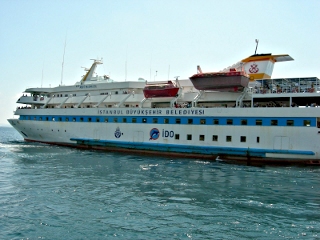
Israel Storms Gaza-bound Aid Convoy,19 Killed


Israel Attacks Gaza Aid Ships, Killing At Least 19

Ships Were Towed to Haifa to Avoid Media Coverage

by Jason Ditz, May 31, 2010
Israel had telegraphed its move for weeks. They had promised to stop the aid ships at all cost, they had promised to use force against the aid workers. Somehow, no amount of official bellicosity could prepare anyone for the carnage that unfolded.

At least 19 aid workers were killed and dozens of others wounded when Israeli commandos, backed up with helicopters, boarded the Mavi Marmara, one of the six aid ships, and opened fire on the passengers.

It was by no means the largest massacre of civilians in Israeli history, or even recent Israeli history, but unlike the others there was no way to couch the deliberate attack on a civilian aid vessel in international waters as Hamas’ fault, or an example of human shields, or even a narrow miss of the real target.

Indeed it has spawned what must be among the lamest attempts at hasbara (public explanation) in Israel’s sordid history, as one of the commandos in the region’s most heavily armed military explained opening fire on civilians by saying “they beat us up with metal sticks.”

Metal sticks notwithstanding, the aid flotilla was violating no international laws in trying to deliver medicine and food to civilian victims of an Israeli blockade. Israel on the other hand was most assuredly violating international law in attacking an unarmed aid ship on the open sea.

There has been talk in the past of Israel running afoul of international piracy laws for capturing previous aid ships. Say what you will of that, but in the previous engagements Israel didn’t massacre the crew, they just took them captive and held them on dubious charges.

Even Israel’s right-far-right coalition seems to have some sense of wrongdoing here, even if they would never admit so publicly. After making a big deal of setting up Ashdod as a “welcoming” facility to process the 700 soon-to-be-captives and loading it up with favorable media, Israel re-routed the ships to Haifa, to escape scrutiny of their handiwork.

The reaction to the massacre has already been enormous. At least five countries have already summoned Israeli ambassadors to demand explanations for the massacre, while thousands of protesters in Istanbul stormed into the Israeli consulate just after the story broke.

A top Fatah official predicted the massacre would enhance the ongoing boycott against Israel and would cause an increasing number of European states, many of whom had MPs on the aid ships, to turn against them. While it is too soon to gauge the level of international outrage it cannot but be noted that people have said the same thing about previous Israeli atrocities, only to find that international support runs far deeper than anyone had imagined.

http://news.antiwar.com/2010/05/31/israel-attacks-gaza-aid-ships-killing-at-least-19/

Monday, May 24, 2010

Call for an Autonomous Sabah

SAPP backs Jeffrey's call for an autonomous Sabah

By Queville To

KOTA KINABALU: The Sabah Progressive Party (SAPP) fully supports PKR vice-president Jeffery Kitingan’s statement calling for the withdrawal of peninsular-based political parties from Sabah and Sarawak.

The opposition party said they agreed with Kitingan that only the restoration of the initial intention and the real spirit when forming Malaysia on Sept 16, 1963, will iron out the kinks that have led Sabah on a downward spiral.

SAPP treasurer-general Wong Yit Ming said Kitingan's call to give back autonomy to Sabah and Sarawak would clear the way for a coalition at federal level.

“The purpose of forming Malaysia by our forefather was to have Sabah, Sarawak, Singapore and Malaya to be the equal partners with equal powers and status," said Wong in a statement issued here on Monday.

"Sabah should not be in equivalent status with the existing states within Malaya because it was Malaya who signed the Malaysia agreement not the individual states."

He said it was wrong for the ruling Barisan Nasional government to tell Sabah is just one the thirteen states making up the federation.

Wong noted that several of the state's rights outlined in the 20 points had been whittled down by the federal government of the years due to subjugation by the federal government leaders.

“Therefore the amendment of Sabah constitution and the downgrading of Sabah's rights as voluntary as stated by Sabah Umno leaders is an insult to the wisdom of Sabahans,” he said.

http://www.freemalaysiatoday.com/fmt-english/politics/sabah-and-sarawak/5966-sapp-backs-jeffreys-call-for-an-autonomous-sabah

Saturday, May 22, 2010

Sabah, Sarawak Partnered Malaya To Form Malaysia - Dompok

PENAMPANG, May 22 (Bernama) -- Sabah and Sarawak partnered Malaya to form Malaysia and therefore cannot be regarded in the same way as the states in the peninsula, United Pasokmomogun Kadazandusun Murut Organisation (Upko) President Tan Sri Bernard Dompok said.

"For all intents and purposes, the founding fathers had envisaged the situation where Sabah and Sarawak and the Federation of Malaya were to form a nation called Malaysia.

"I think the spirit of that agreement is reflected today with Sabah and Sarawak having their own cabinets and systems of government," he told reporters after launching Kampung Madsiang Kaamatan Festival here Saturday.

Dompok, who is Plantation Industries and Commodities Minister, was asked to comment on issues raised by Universiti Utara Malaysia (UUM) lecturer Prof Dr Ranjit Singh during a public policy seminar here on Thursday.

Prof Dr Ranjit Singh, of UUM's College of Law, Government and International Studies, in his working paper titled "Sabah Politics and Policy and Federal-State Relations 1963-1995", said Sabah and Sarawak could not claim that Malaysia was a partnership of three equal members.

Dompok said when Sabah and Sarawak were brought in to form Malaysia, certain provisions were made to ensure the rights of the two Bornean states were preserved and protected, including their administration systems and control over immigration matters.

Meanwhile, Tourism, Culture and Environment Minister Datuk Masidi Manjun said historical circumstances gave Sabah the basis to enjoy certain autonomy compared to other states in Peninsular Malaysia.

"Dr Ranjit was saying it from the academic point of view," he said.

"The challenge is not only to understand the peculiarities in the Peninsular Malaysia, but also for the people in the peninsula, including decision-makers, to understand our (Sabah and Sarawak) systems," he said.

"In other words," Masidi said, "there is no such thing of a one-size-fits-all policy. It has to be tailor-made to suit the peculiarities of Sabah and Sarawak."

-- BERNAMA
http://www.bernama.com/bernama/v5/newsindex.php?id=500383

Sunday, May 16, 2010

US Funds Israel’s Apartheid Roads Plan

Settlers benefit from Israeli-only routes

by Jonathan Cook, May 16, 2010

The construction of sections of a controversial segregated road network in the West Bank planned by Israel for Palestinians – leaving the main roads for exclusive use by settlers – is being financed by a US government aid agency, a map prepared by Palestinian researchers has revealed.

USAID, which funds development projects in Palestinian areas, is reported to have helped to build 114km of Israeli-proposed roads, despite a pledge from Washington six years ago that it would not assist in implementing what has been widely described as Israel’s "apartheid road" plan.

To date the agency has paid for the construction of nearly a quarter of the segregated road network put forward by Israel in 2004, said the Applied Research Institute of Jerusalem (ARIJ).

The roads are designed to provide alternative routes to connect Palestinian communities, often by upgrading circuitious dirt tracks or by building tunnels under existing routes.

Meanwhile, according to human rights groups, Israel has reserved an increasing number of main roads in the West Bank for Israelis so that Jewish settlers can drive more easily and quickly into Israel, making their illegal communities more attractive places to live.

The US agency’s involvement in building a segregated West Bank road infrastructure would run counter to Washington’s oft-stated goal, including as it launched "proximity talks" last week, to establish a viable Palestinian state with territorial contiguity.

"The displacement of Palestinians from the West Bank’s main roads improves the appeal of the settlements by better integrating them into Israel," said Suheil Khalilieh, the head of settlement monitoring at ARIJ. "Conversely, creating an inferior, alternative network of local roads makes travel between the main regions of the West Bank difficult and time-consuming for Palestinians."

Israel proposed the creation of two separate road systems in 2004, after many of the West Bank’s main roads had been sealed off to Palestinians following the outbreak of the second intifada.

Ariel Sharon, the then-prime minister, argued that segregated infrastructure would create "contiguity of transportation" for Palestinians and help to alleviate economic hardship resulting from hundreds of roadblocks and checkpoints that restrict Palestinian movement.

The international community was asked to finance 500km of roads for the Palestinians, later termed "fabric of life" roads, including upgrading agricultural tracks and constructing many underpasses and bridges, at a cost of $200 million.

The Palestinian Authority, however, objected, saying the plan would further entrench the illegal settlements in the West Bank and justify confiscating yet more Palestinian land for the new roads.

That position was backed by international donors, including the US, which declared it would not finance any road projects against the PA’s will.

Despite the US promise, however, a map of the West Bank recently published by ARIJ shows that 23 per cent of the "alternative" road network Israel proposed has been built with USAid money.

Many of these roads are located in so-called Areas B and C, more than 80 percent of the West Bank that was assigned to Israeli security control by the Oslo accords. Israel oversees all road projects in these areas.

Mr Khalilieh said the PA was being effectively bullied into conceding the road infrastructure wanted by Israel.

"What happens is that USAid presents a package deal of donations for infrastructure projects in the West Bank and the Palestinians are faced with a choice of take it or leave it. That way the PA is cornered into accepting roads it does not want."

He said some roads were also being approved because of a lack of oversight by the PA. An inter-ministerial committee to vet proposed roads to ensure they did not contribute to the Israeli plan had been inactive since 2006, he said, following the split between Fatah and Hamas in the Palestinian elections.

After PA officials were presented with ARIJ’s map, Salam Fayyad, the Palestinian prime minister, issued a statement last weekend denying that the PA had contributed to the Israeli-proposed road network.

However, in a sign that such reassurances were unlikely to dampen concerns, he reconvened the inter-ministerial committee to conduct field vists to check on road projects that had been carried out or were in progress.

Ghassan Khatib, a Palestinian government spokesman and a former planning minister, said the PA was taking the issue "very seriously" and was doing everything possible to resist the emergence of an "apartheid system" in the West Bank.

He added that, if roads were being built that served the settlers’ interests, "that is not supposed to happen."

According to USAid’s figures, it has financed 235km of roads in the West Bank in the past decade, and is preparing to add another 120km by the end of this year.

Critics add that in some cases the upgrading by USAid of minor roads, even those not included in the Israeli plan, has worked to the same end of keeping Palestinians off the West Bank’s main highways.

USAID officials were unavailable for comment.

Among roads for Palestinians funded by USAID are several projects south of Bethlehem that appear to be providing an "alternative" to Road 60, a busy highway that has traditionally linked Jerusalem with the Palestinian cities of Bethlehem and Hebron in the southern West Bank.

Israel has increasingly restricted Palestinian access to Road 60 because it also serves as a fast direct route for Jewish settlers in the Gush Etzion bloc driving to and from Jerusalem.

As a result, residents of several nearby Palestinian villages, including Batir, Wadi Fukin, al Walaja and Husan, have been forced off Road 60 and on to USAID-funded side roads and underpasses to connect them to Bethlehem and other neighbouring communities.

Sarit Michaeli, a spokeswoman for B’Tselem, an Israeli human rights group, said 170km of roads in the West Bank were either off-limits to Palestinians or highly restricted, creating what the organisation has called "forbidden roads."

B’Tselem noted that, after the 2004 scheme for complete separation was rejected by donors, Israel adapted the plan, using bridges, tunnels and interchanges to create partial separation, with Israelis "traveling on the fast upper levels, and Palestinians on the lower levels." It concluded: "The plan allows Palestinian vehicles to travel on only 20 per cent of the [West Bank] roads on which Israeli vehicles travel."

Ms. Michaeli added that the growing dependence of Palestinian traffic on underpasses meant that Israel was in a position to control or even sever connections between Palestinian areas with only one military jeep.

Ingrid Jaradat Gassner, the director of Badil, a Bethlehem-based organisation that has lobbied against road segregation in the southern West Bank, said there was considerable domestic and international pressure on the PA to agree to roads dictated by Israel, if only because they often eased the existing restrictions on Palestinian movement.

"Sadly, the PA is helping to build its own Bantustans," she said. "Palestinian towns and villages connected by back roads and tunnels while the settlers control the main highways is what the US appears to mean when it talks about a viable Palestinian state."

A version of this article originally appeared in The National (www.thenational.ae), published in Abu Dhabi.

http://original.antiwar.com/cook/2010/05/15/us-funds-israels-apartheid-roads-plan/

Friday, May 14, 2010

2011 Deadline To Solve Identification Document Woes In Sabah, Sarawak

SIBU, May 14 (Bernama) -- The Home Ministry is giving itself until next year to resolve identification document woes faced by people in Sabah and Sarawak, said its minister Datuk Seri Hishammuddin Tun Hussein.

He said this time frame was needed to enable the various verification processes for the issuing of birth certificates, MyKad identification card and citizenship status to be carried out.

"I have instructed National Registration Department (NRD) officers in Sarawak and Sabah who carry out outreach and mobile unit programmes to be more proactive in the matter.

"They will go down to the ground in rural and interior areas to help people who do not possess personal identification documents. This is a KPI (Key Performance Indicator) of the ministry," he told reporters after opening the ministry's "Meet-the-Customer Day" here Friday.

Earlier, Hishammuddin had presented citizenship certificates to 14 recipients, late registration birth certifcates (four recipients), MyKad (five recipients), MyKid (five recipients).

From January till April this year, Sarawak NRD received 1,770 applications for late registration of births and 1,313 late Mykad applications.

According to the statistics, 25,254 people in Sarawak who are eligible for the documents have yet to file in applications for them.

-- BERNAMA

Tuesday, May 4, 2010

Sabah Lunches Foreigners' Laboratory

Lab Of Management Of Foreigners In Sabah Launched

KOTA KINABALU, May 4 (Bernama) -- A special laboratory on the management of foreigners aimed at enhancing management, entry system, monitoring and confirmation of foreigners in Sabah was launched today and would be operational for four weeks.

Chief Minister Datuk Seri Musa Aman said 30 government officers from various departments and agencies with wide experience in their respective fields had been selected and would be involved in the laboratory on a full-time basis.

"We hope they can provide positive inputs in resolving problems concerning illegal immigrants," he told reporters after chairing a meeting of the State Working Committee on Security, here today

The creation of the laboratory showed that the government was deeply concerned and took a serious view on the presence of illegal immigrants in the state, where the decision to set up the laboratory was made after the meeting of the Cabinet Committee on Foreign Workers and Illegal Immigrants chaired by Deputy Prime Minister Tan Sri Muhyiddin Yassin.

Musa said the laboratory would gather the latest data on foreigners in Sabah, according to the category whether they came legally or otherwise.

Earlier, he said the security situation in the state to date was good and under control and there were no indications of any major threat which could jeopardise harmony and peace in the state.

"The integrated operation to detect illegal immigrants will be continued and it is now entering the third phase which was launched today, involving all areas in Sabah which will run for 24 series," he said.

-- BERNAMA

Wednesday, April 28, 2010

Sabah a hotspot for human trafficking

By Michael Kaung

KOTA KINABALU: Sabah police have admitted that the state is now a hotspot for human trafficking in the country.

Apart from the difficulty in preventing crimes due to the state's weak border control, providing shelter and protection to victims who escape the trade has also become a major concern.

Head of the anti-gambling, gangsterism and prostitution unit at the Sabah police headquarters, DSP Mohd Taufik Maidin, said police are finding it hard to shelter the victims while waiting for their cases to be brought up in court.

Taufik said Sabah is considered one of the three top destinations for human traffickers in the country and several syndicates had been crippled between last year and March this year.

He said 23 pimps, including seven women, were arrested for luring women into the sex trade.

He added that 35 women, mostly foreigners from a neighbouring country, were arrested in three raids at prostitution dens, including in the interior of the state.

Taufik, who made the disclosure in his paper “Trafficking Crime in Sabah” during a seminar on “Anti-Trafficking in Persons(ATIP) Act 2007” here on Tuesday said the 33 women, aged between 14 and 28, were detained during raids last year.

He said human trafficking thrived in Sabah due to its economic prosperity as well as to poor border control, which allowed people to enter the state illegally.

"The open and rugged border made monitoring human trafficking difficult besides logistic and manpower problems.

Sex trade

Victims are brought in overland as well as by sea and air and are forced into the sex trade by deception, coercion, abuse or intimidation, Taufik said.

Sabah Women's Advisory Council (SWAC) deputy chairman Mariati Robert agrees that there is insufficient protection for victims of the crime.

She said there was an urgent need to set up more shelters in the state to protect such victims, especially on the east coast of the state.

There are three such homes, one of which is run by an NGO.

"Due to human trafficking and other related violent activities, these homes are inadequate to help the police when victims like battered wives and children seek protection."

She said such homes should also be staffed by qualified counsellors to help rehabilitate the victims.

The seminar was told that so far five people have been convicted under the ATIP Act, with the first case involving a foreigner who pleaded guilty to forcing his maid into prostitution.

Since 2008, 173 suspects have been arrested under the Act, 23 have been prosecuted, 17 have been brought to court and 36 are under investigation.

Eighty percent of the cases are suspected to have been involved in human trafficking for prostitution.

Five enforcement officers have been arrested for their involvement in trafficking Myanmar refugees and one has been prosecuted.

Debt bondage

Most of the women brought into Malaysia are from Thailand, the Philippines, Indonesia, Myanmar, Cambodia, Vietnam and South Korea.

It is not a one-way traffic. Malaysians have also found themselves victims in countries such as Singapore, Macau, Taiwan, Hong Kong, the United Kingdom, Australia and Canada.

The seminar was organised by SWAC to increase public awareness of the Act and will also be conducted in other districts in the state soon.

Human trafficking is different from people smuggling where people pay a fee to smugglers to get them into a country. There may be no deception involved in the illegal agreement. On arrival at the destination, the smuggled persons are usually free to find their own way.

The trafficking victim, on the other hand, is not permitted to leave, and is required to work or provide services of some kind to the trafficker or others.

The arrangement may be in the form of a work contract, but with no or low payment or on highly exploitative terms.

Sometimes the arrangement is structured as a debt bondage, with the victim not being permitted or able to pay off the debt.

Victims are sometimes tricked and lured by false promises or are physically forced.

Some traffickers coerce or manipulate victims and use deception, intimidation, feigned love, isolation, threats and physical force, and debt bondage.

Trafficking is a lucrative industry and could be controlled by criminal organisations.

However, most of the trafficking is done by networks of smaller groups that each specialises in a certain area, like recruitment, transport, advertising, or retail.

This is profitable because little start-up capital is needed, and prosecution is relatively rare.

People who victims of trafficking are usually the most vulnerable and powerless minorities.

They come mostly from the poorer areas where opportunities are limited. They are often ethnic minorities or displaced persons such as runaways or refugees, though they may come from any social background, class or race.

http://www.freemalaysiatoday.com/fmt-english/politics/sabah-and-sarawak/4980-human-trafficking-an-issue-in-sabah

Monday, April 26, 2010

Gadhafi rejects RP Muslims’ secession

By EDD K. USMAN
April 26, 2010, 2:23pm

TRIPOLI -- The Leader of the Great Socialist People's Libyan Arab Jamahiriya Col. Muammar al-Gadhafi has always stressed in his meetings with Moro leaders that they should remain within the realm of the Philippine society and sovereignty, said Ambassador Salem Muhammad Adam, former Libyan envoy to the Philippines.

Adam said this has been the repeated message of Gadhafi when he granted an audience in the past to leaders of the Moro National Liberation Front (MNLF) and the Moro Islamic Liberation Front (MILF).

He said this has not changed.

Adam spoke with the Manila Bulletin after the signing last April 20 of the Memorandum of Understanding (MOU) between the Manila Government and the MNLF at the restrictive Islamic Call College (ICC), about 30 minutes from downtown Tripoli.

"The Leader (Gadhafi) has always been keen to (help) bring peace and stability to Mindanao. The leaders of the MNLF and the MILF, and even (representatives of) the Philippine Government had audience with the Leader two or three times. And the Leader has always given his guidelines to Filipino Muslims to stay within the realm and sovereignty of the Philippines. And on the other side, the Philippine Government should respect the rights of the Muslims," said the former ambassador now working at the Ministry of Foreign Affairs as adviser to the Asian Affairs Department.

Adam recalled that Gadhafi, who masterminded the Al-Fateh Revolution on September 1, 1969, that toppled the monarchy of King Idris, even suggested that a Muslim could one day become president of the Philippines.

Adam presided over the April 20 signing of the MOU which the Libyan Government hosted. The event was under the auspices of the Organization of the Islamic Conference (OIC) through its Peace Committee for Southern Philippines (PCS) chaired by Indonesia.

The Libyan official, who served twice as ambassador to the Philippines, cited the continuing role of Gadhafi and his government in the search for peace in Mindanao.

It was Gadhafi who was the first Islamic and Arab leader to come to the assistance of the Moros in the early 1970s after the March 18, 1969 Jabidah Massacre on Corregidor Island.

"The Leader talked to President (Ferdinand) Marcos and asked him to stop the massacres of Muslims. Immediately, the OIC formed the Committee of Four composed of Libya, Saudi Arabia, Senegal and Somali for a fact-finding to the Philippines in 1975. In 1976, MNLF leaders and Philippine Government officials came to Tripoli and signed on December 23 the Tripoli Peace Agreement," said Adam.

Without Libya peace would not have come to Mindanao, he said.

He said the 1976 peace treaty has now become the mother of all peace accords that came later, such as the 1986 Jeddah Accord and the 1996 Jakarta Agreement (or the Final Peace Agreement).

Adam lauded the signing of the MOU which serves to continue the tripartite review of the FPA agreed during the administration of President Fidel V. Ramos.

"We are very happy that both sides under the auspices of the Committee of Twelve (PCSP) of the OIC were able to finally sign the Memorandum of Understanding as a new mechanism for the full implementation of the 1996 peace agreement...with the hope (the Philippine) Congress will help for the benefit of not only Muslims, but also Christians and Indigenous People," said Adam.

http://www.mb.com.ph/node/254611/gadhafi-reject

Tuesday, April 20, 2010

Call To Review Kampung Bahagia Status As Refugee Settlement

KOTA KINABALU, April 20 (Bernama) -- An assemblyman on Tuesday urged the state government to review the status of Kampung Bahagia in Sandakan as a refugee settlement.

Datuk Samsudin Yahya (BN-Sekong), when debating the government policy speech today, said the area, which was designated as a refugee settlement by the United Nations High Commissioner for Refugees during the war in the neighbouring southern Philippines in the 70's, now comprised mostly locals.

"About 55 per cent of these locals are registered voters. The government has also set up a village security and development committee in the area," he said.

Refugees remaining in the area should be moved to a new settlement, he added.

Meanwhile, Datuk Syed Abas Syed Ali (BN-Balung) suggested that housing assistance should also be extended to those in the middle-income group.

He said that while many facilities were given to the poor and hardcore poor to own a house, it was not the case with those in the middle-income group who earned between RM1,500 and RM3,000 a month.

He also suggested that the government made it compulsory for developers to allocate at least 30 per cent of houses to these groups.

"The government should also set the ceiling price for terrace houses at RM120,000 each. It should wield its power against developers who are only interested in raking in profit and forgetting their social responsibilities," he said.

-- BERNAMA

Sunday, April 18, 2010

Sabah's refugee riddle hits a wall of suspicion

By Queville To

KOTA KINABALU: Chaos and confusion continue to reign in Sabah over the status of thousands of refugees and undocumented foreigners residing in the state.

The federal government has over the years received several dressing downs over the issue from Sabah politicians who have showed no sign of backing down.

Gloomy Sabahans have likened the booming foreigner population, and the lack of response of the federal authorities, to thieves entering in the night.

MP for Kota Kinabalu Dr Hiew King Cheu said the government continues to ignore, at its peril, the frustrations of the local population over the issue.

He chose to confront the silver-tongued Home Affairs Minister Hishammuddin Hussein in Parliament recently to demand an explanation why the government continued to legitimise their stay in Sabah.

Hishammuddin used the occasion to issue the government's stock reply that Mykads were only issued to those who are eligible under the National Registration Act 1959 (Article 78) in accordance to the Federal Constitution.

He then went on to explain that the IMM13 documents issued by the Immigration Department are the special passes that allow refugees to enter and stay in Malaysia on a yearly basis and are granted by the Home Affairs Ministry on humanitarian ground.

The answer left Hiew fuming.

He claims that thousands of the so-called refugees in Sabah have actually been granted citizenship by virtue of having been granted Mykads.

"The government should send foreign refugees in Sabah back to their home countries, instead of granting them Mykads and making them citizens of this country," he said in reply to Hishammuddin.

He said that there are some 96,000 refugees from the neighbouring countries holding IMM13 documents residing in Sabah and estimated that the number of refugees who had been issued with the Malaysian citizenship over the years to be no less than 30,0000 people.

Hiew contends that the government should have deported the refugees, who escaped the conflict in the Southern Philippines by fleeing to Sabah in the 1960s.

Sabah’s population has ballooned dramatically over the past four decades from 450,000 at the time of the formation of Malaysia in 1963 to 3.28 million people now.

“The most incredible increase of Sabah's population happened during the 90s with an increase of almost one million people within a period of few years,” Hiew said.

The illegal immigrant and refugee population is already expected to have a far-reaching impact on Malaysia and especially Sabah even without them being granted citizenship.

Shifting voting patterns

The government denies it is doing this.

But like most Sabahans, Hiew is not convinced.

A good number of Sabahans agree with him and believe that they have already been disenfranchised by the newcomers. They point to the sudden shift in voting patterns as proof of their contention.

Hiew says it will be doomsday for Sabah if such a trend continues unabated as it would marginalize bona fide citizens in the long run in terms of socio-economic development.

He explained that this is because locals are incapable of competing with refugees and immigrants who are willing to accept low salaries and work long hours.

He claims that this is one of the reasons for the continued exodus of Sabah youths from the state to seek employment elsewhere.

He said it is an open secret that refugees and immigrants have gained Malaysian citizenship.

Apart from being fraudulent it is also unfair to those red identity cards holders who had been residing in the country for a long time, some for more than four decades now.

They should be given priority, he said.

Hiew's assessment of the problem is not new.

Early last year, Human Rights Commission of Malaysia (Suhakam) vice chairman Simon Sipaun even asserted that all refugees in Sabah are actually illegal immigrants because Malaysia is neither a party to the United Nations Convention on the status of the refugees in 1951 nor the 1967 Refugee Protocol.

He made the assertion when commenting on a report in the local media about displaced Indonesians who number 12,000 and Filipinos who number 81,000, who were given the IMM13 documents that allowed them to live and work in Sabah since 1965.

Speaking at a forum organised by the Sabah Progressive Party (SAPP) on Jan 9 last year, Sipaun questioned why the issue of refugees was only confined to Sabah.

He said the federal government started issuing IMM13 cards to the Rohingyas from Myanmar in Peninsular but quickly aborted it.

He also questioned why the refugees were only allowed to reside and earn their living in Sabah and not Peninsular Malaysia and why are they still in Sabah.

"The Vietnamese refugees were all gone after two years. How come that in Sabah, the refugees are still here?"

The majority of the foreigners with refugee status have been residing in Sabah for over 35 years. There is no limit to the length of their stay. Their children are allowed to attend both primary and secondary schools in the State.

http://www.freemalaysiatoday.com/fmt-english/politics/sabah-and-sarawak/4671-sabahs-refugee-riddle-hits-a-wall-of-suspicion

Wednesday, April 14, 2010

Bedouin leave city for their desert roots

Hugh Naylor

  • Last Updated: April 14. 2010 11:55PM UAE / April 14. 2010 7:55PM GMT

Saleh al Harthi, who works as a policeman in Abu Dhabi, enjoys a stay at his Shamkha desert home, with his granddaughters Rawan, five, and Leila, three. Stephen Lock / The National

ABU DHABI // Saleh al Harthi prefers the tranquil comforts of his sleepy desert settlement to the hustle and bustle of Dubai and Abu Dhabi.

Here in Shamkha, a villa community on the outskirts of the capital occupied primarily by Emiratis and other Gulf Arabs, he and his neighbours can walk together to a nearby mosque for Friday prayers. In the sizzling heat of the day, he and his family can lounge in a Bedouin tent, decked out with a television, air conditioner and trays serving fresh camel milk, pitched in front of his villa’s entrance.

Abandoning this lifestyle, in which English is rarely spoken and neighbours know each other intimately in these wide open spaces, for the city is out of the question, said Mr al Harthi, a Saudi who works as a policeman in Abu Dhabi.

Mr al Harthi, who was born in the southern outpost of Najran, Saudi Arabia, more than 50 years ago, said: “I can’t live there; my life is in the desert. Outside the city, Shamkha, Bani Yas, there’s no traffic.”

As Dubai and Abu Dhabi attract cosmopolitan populations into their urban high-rises and freehold villa compounds, some Emiratis and other Gulf Arabs, such as Mr al Harthi, are gravitating to far-flung havens.

They are not moving en masse to Dubai to capitalise on low rents and modern flats, as foreign nationals have. Most are opting instead for these vast expanses of sand dunes punctuated by the occasional palm grove, where they feel their ancestors’ borderless roots are most firmly planted.

“The bedouin … we want sand,” said Mohammed Meqbali, 56, a retired army officer who has lived in his six-room Al Falah villa since 2002.

In Al Falah, just across the road from Shamkha, Mr Meqbali spends his evenings watching his two sons play football in the empty streets with his neighbours. At weekends, instead of Dubai’s mega-malls, he and his family enjoy barbecues in the desert with his brother in Al Ain.

“I go to Dubai once a year, maybe two times, but there’s so much traffic,” said Mr Meqbali, who is wearing gold-rimmed spectacles, and sitting cross-legged in a majlis adorned with sand-coloured cushions.

“We go to Al Ain, Jebel Hafeet. There’s not a lot of traffic. It’s better; you’re happier when you go there. The souls of the Bedouin are the sand, the desert.”

A preference for desert communities over burgeoning urban dwellings is the result of what Prof Aqil Khazim, who teaches urban sociology at UAE University, calls the “push-pull factor”.

Free housing in rural areas provided by the Government does the pulling. “Then you have the push factor,” he said. “Many locals are moving out from the middle of the town, from crowded areas becoming crowded by non-locals.”

The Government, he said, prefers building its villa communities for Emiratis in rural areas because the extra space allows for extended families to move together, thereby retaining their sense of community.


“They move together in different areas,” he said. “For example, if you’re from one area, they take into consideration your tribal influence, your roots, your family.”

He said cultural differences in the newly built freehold properties, such as those in Dubai and Abu Dhabi, also play a part. “Culture does play a role here, because you don’t have a local community there,” he said. “In these areas, there is no community. It’s communities – you have so many different cultures in the area, and it’s become very multicultural.”

Many Emiratis are put off by the relative scarcity of community mosques in Dubai’s freehold properties. Malls and shopping centres may have small places of worship, but they are bereft of the stand-alone gathering places defined by towering minarets and crowds of worshippers flooding the streets on Friday mornings.

“Every Friday we go to the mosque together,” said Mr al Harthi, whose mosque is less than a quarter of a mile from his house. “Sometimes I walk with my family there. If it’s hot, we drive.”

On The Palm Jumeirah, with a projected population of about 70,000, a spokesman confirmed that there was only one “operational” mosque.

In Jumeirah Lakes Towers, a development overseen by Dubai Multi Commodities Centre, another spokesperson said: “There is currently one Juma/Friday prayer mosque … this is in addition to the two planned mosques. It is not a stand-alone facility and was not built as a statutory requirement, but rather as a community initiative undertaken by the sub-developer.”

Dubai Properties and Emaar, the Middle East’s largest property developer, did not respond to several requests about the issue. And there has been confusion among these developers as to what entity was charged with providing regulation on mosques in freehold properties.

Regardless, for Abdullah, a lack of such traditional amenities as mosques in freehold properties is part of the reason why he chose Al Falah when he left Abu Dhabi five years ago.

“This our life – we are from the desert,” said Abdullah, declining to give his last name because he was employed by Abu Dhabi Police. He lives in a villa with his wife and six children. “We don’t accept the tall buildings. It’s better than Abu Dhabi. Here, the weather is clear; there is parking for my car. I can sleep at night because it’s quiet.”

“At night,” he added, “sometimes, I put my chair here in the front of my house and just sit. We can freely walk the land.”

hnaylor@thenational.ae

http://www.thenational.ae/apps/pbcs.dll/article?AID=/20100415/NATIONAL/704149864/1040/SPORT

Tuesday, April 6, 2010

Why There Are No ‘Israelis’ in Israel

by Jonathan Cook, April 07, 2010

A group of Jews and Arabs are fighting in the Israeli courts to be recognized as "Israelis," a nationality currently denied them, in a case that officials fear may threaten the country’s self-declared status as a Jewish state.

Israel refused to recognize an Israeli nationality at the country’s establishment in 1948, making an unusual distinction between "citizenship" and "nationality." Although all Israelis qualify as "citizens of Israel," the state is defined as belonging to the "Jewish nation," meaning not only the 5.6 million Israeli Jews but also more than 7 million Jews in the diaspora.


Critics say the special status of Jewish nationality has been a way to undermine the citizenship rights of non-Jews in Israel, especially the fifth of the population who are Arab. Some 30 laws in Israel specifically privilege Jews, including in the areas of immigration rights, naturalization, access to land, and employment.

Arab leaders have also long complained that indications of “Arab” nationality on ID cards make it easy for police and government officials to target Arab citizens for harsher treatment.

The Interior Ministry has adopted more than 130 possible nationalities for Israeli citizens, most of them defined in religious or ethnic terms, with "Jewish" and "Arab" being the main categories.

The group’s legal case is being heard by the supreme court after a district judge rejected their petition two years ago, backing the state’s position that there is no Israeli nation.

The head of the campaign for Israeli nationality, Uzi Ornan, a retired linguistics professor, said: "It is absurd that Israel, which recognizes dozens of different nationalities, refuses to recognize the one nationality it is supposed to represent."

The government opposes the case, claiming that the campaign’s real goal is to "undermine the state’s infrastructure" – a presumed reference to laws and official institutions that ensure Jewish citizens enjoy a privileged status in Israel.

Ornan, 86, said that denying a common Israeli nationality was the linchpin of state-sanctioned discrimination against the Arab population.

"There are even two laws – the Law of Return for Jews and the Citizenship Law for Arabs – that determine how you belong to the state," he said. "What kind of democracy divides its citizens into two kinds?"

Yoel Harshefi, a lawyer supporting Ornan, said the Interior Ministry had resorted to creating national groups with no legal recognition outside Israel, such as "Arab" or "unknown," to avoid recognizing an Israeli nationality.

In official documents most Israelis are classified as "Jewish" or "Arab," but immigrants whose status as Jews is questioned by the Israeli rabbinate, including more than 300,000 arrivals from the former Soviet Union, are typically registered according to their country of origin.

"Imagine the uproar in Jewish communities in the United States, Britain, or France, if the authorities there tried to classify their citizens as ‘Jewish’ or ‘Christian,’" said Ornan.

The professor, who lives close to Haifa, launched his legal action after the Interior Ministry refused to change his nationality to "Israeli" in 2000. An online petition declaring "I am an Israeli" has attracted several thousand signatures.

Ornan has been joined in his action by 20 other public figures, including former government minister Shulamit Aloni. Several members have been registered with unusual nationalities such as "Russian," "Buddhist," "Georgian," and "Burmese."

Two Arabs are party to the case, including Adel Kadaan, who courted controversy in the 1990s by waging a lengthy legal action to be allowed to live in one of several hundred communities in Israel open only to Jews.

Uri Avnery, a peace activist and former member of the parliament, said the current nationality system gives Jews living abroad a far greater stake in Israel than its 1.3 million Arab citizens.

"The state of Israel cannot recognize an ‘Israeli’ nation because it is the state of the ‘Jewish’ nation … it belongs to the Jews of Brooklyn, Budapest, and Buenos Aires, even though these consider themselves as belonging to the American, Hungarian, or Argentine nations."

International Zionist organizations representing the diaspora, such as the Jewish National Fund and the Jewish Agency, are given in Israeli law a special, quasi-governmental role, especially in relation to immigration and control over large areas of Israeli territory for the settlement of Jews only.

Ornan said the lack of a common nationality violated Israel’s Declaration of Independence, which says the state will "uphold the full social and political equality of all its citizens, without distinction of religion, race, or sex."

Indications of nationality on ID cards carried by Israelis made it easy for officials to discriminate against Arab citizens, he added.

The government has countered that the nationality section on ID cards was phased out from 2000 – after the Interior Ministry, which was run by a religious party at the time, objected to a court order requiring it to identify non-Orthodox Jews as "Jewish" on the cards.

However, Ornan said any official could instantly tell if he was looking at the card of a Jew or Arab because the date of birth on the IDs of Jews was given according to the Hebrew calendar. In addition, the ID of an Arab, unlike a Jew, included the grandfather’s name.

"Flash your ID card and whatever government clerk is sitting across from you immediately knows which ‘clan’ you belong to, and can refer you to those best suited to ‘handle your kind,’" Ornan said.

The distinction between Jewish and Arab nationalities is also shown on Interior Ministry records used to make important decisions about personal status issues such as marriage, divorce, and death, which are dealt with on entirely sectarian terms.

Only Israelis from the same religious group, for example, are allowed to marry inside Israel – otherwise they are forced to wed abroad – and cemeteries are separated according to religious belonging.

Some of those who have joined the campaign complain that it has damaged their business interests. One Druze member, Carmel Wahaba, said he had lost the chance to establish an import-export company in France because officials there refused to accept documents stating his nationality as "Druze" rather than "Israeli."

The group also said it hoped to expose a verbal sleight of hand that intentionally mistranslates the Hebrew term "Israeli citizenship" on the country’s passports as "Israeli nationality" in English to avoid problems with foreign border officials.

B. Michael, a commentator for Yedioth Aharonoth, Israel’s most popular newspaper, has observed: "We are all Israeli nationals – but only abroad."

The campaign, however, is likely to face an uphill struggle in the courts.

A similar legal suit brought by a Tel Aviv psychologist, George Tamrin, failed in 1970. Shimon Agranat, head of the supreme court at the time, ruled: "There is no Israeli nation separate from the Jewish people. … The Jewish people is composed not only of those residing in Israel but also of Diaspora Jewries."

That view was echoed by the district court in 2008 when it heard Ornan’s case.

The judges in the supreme court, which held the first appeal hearing last month, indicated that they too were likely to be unsympathetic. Justice Uzi Fogelman said: "The question is whether or not the court is the right place to solve this problem."

A version of this article originally appeared in The National, published in Abu Dhabi.

http://original.antiwar.com/cook/2010/04/06/no-israelis-in-israel/

Para-teachers augment student needs in Tipo-Tipo, Basilan

PIA News release

Tipo-Tipo, Basilan (5 April) -- Scarcity of teachers in the primary and secondary schools had pushed the local officials to utilize municipal employees to teach here.

Mayor Ingatun Istarul in an interview said the situation is a result of the in-migration of families from the interior barangays in the locality.

With the present teacher to student/pupil ratio which is 1:100, the local government decided to utilize the employees a.k.a. "Para-Teachers" that have education background to teach either in the secondary or in the primary school, the Mayor said.

The local government was able to temporarily address the problem. However, the LGU has also planned to hire additional teachers for the coming school year due to the continuing increase of families coming into the municipality.

"These families were victims of insurgency problems, they have evacuated to the town proper to escape from the harm brought by the dissident terrorists", Ingatun explained.

He said hundreds of adults and children trooped into the town center and decided to permanently stay and live a peaceful life away from rebel encounters.

This has increased the number of students and pupils in the two (2) secondary and seven (7) primary schools.

Aside from hiring additional teachers, the LGU also planned to construct additional school buildings as well as health center facilities (with assistance from the national government) to further cater to the pressing needs of the people.

To date, the government has already constructed more than three hundred thousand (300,000) classrooms nationwide for a better learning environment of students.

Recently, President Gloria Macapagal Arroyo visited the LGU to personally get on-site update of the Basilan circumferential road rehabilitation project particularly the 39 kilometer Maluso-Tipo-Tipo road section.

The road project which would be completed within 120 days would reduce cost and time travel for commuters as well as it would enhance economic activity within the province, Istarul said

More than seventeen thousand (17,000) kilometers of farm to market roads and 47,700 kilometers of main roads have been constructed by the government nationwide.

Hopefully the improvement of the main arteries in the municipality would bring peace and development in the area which is one of the priority programs of the government, Istarul said. (fnm/PIA-Zamboanga City)

http://www.pia.gov.ph/default.asp?m=12&r=&y=&mo=&fi=p100405.htm&no=29

Tuesday, March 9, 2010

Interpol seeks 16 over Dubai assassination

By Angela Doland, Associated Press

Tuesday, 9 March 2010


PARIS Interpol said yesterday it had issued an alert for 16 more suspects in connection with the January slaying of a Hamas commander in a Dubai hotel room.

The organisation says it issued red notices, its highest-level alert, for a 16-strong team accused of shadowing Mahmoud al-Mabhouh before his killing. It had already issued notices for 11 other suspects last month.

The alerts came at the request of authorities in Dubai in the United Arab Emirates, where al-Mabhouh was found dead in a luxury hotel room in January. His methodical stalking and killing has been widely blamed on Israel's Mossad spy agency. Israel has neither confirmed nor denied involvement.

Dubai police had previously released information about all of Interpol's newly listed suspects, with the exception of one. Interpol listed his alias as Joshua Aaron Krycer. It did not give his age or nationality, but he appeared to be in his late 20s or early 30s. His snapshot showed a dark-haired man with thick eyebrows grinning confidently at the camera.

The group of 16 is believed to have assisted another team, which Interpol described as a "smaller core group alleged to have carried out the killing" and whose members were already sought through Interpol notices.

According to the Dubai police probe, the "second team, the members of which are now also subject of red notices, is believed to have aided and abetted the first team by closely watching, following and reporting al-Mabhouh's movements from the moment he landed at Dubai airport until his murder on Jan. 19," Interpol said.

The suspects' nationalities were not listed, as those linked to the plot are believed to have used falsified passports from Europe or Australia. Many of them are linked to apparent identity theft.

The statement from Interpol said police in Dubai have agreed to enter evidence in the case — including DNA profiles — into Interpol's international databases.

The organization's secretary general, Ronald K. Noble, said sharing information internationally is "all the more important when the case reportedly involves multiple cross-border movements worldwide and the use of fraudulently altered passports by individuals using aliases."

Interpol also said it was to join a Dubai-based international task force probing the killing. Noble's statement described it as a "task force with Interpol and interested countries whose passports were fraudulently altered." It was not immediately clear which countries were taking part.

http://www.independent.co.uk/news/world/middle-east/interpol-seeks-16-over-dubai-assassination-1918365.html

Tuesday, February 23, 2010

Skin diseases plague latest Pinoy deportees from Malaysia

abs-cbnNEWS.com | 02/23/2010 6:46 PM

ZAMBOANGA CITY, Philippines – The latest Filipino deportees who arrived in Zamboanga City from Malaysia are reportedly suffering from skin diseases.

According to the Regional Epidemiology Surveillance Unit or (RESU) of the city’s Department of Health (DOH), the number of deportees with skin ailment have reached more than a hundred or 25%.

According to Dr. Marcos Redoble, 20 children and 100 adults have skin diseases.

Redoble said he believes the deportees got infected due to the harsh conditions inside detention centers in Malaysia.

Deportees, meanwhile, said the lack of water made it impossible for them to take a bath regularly inside the detention center.

The medical staff of the city's DOH immediately gave first aid treatment to the deportees. Aside from skin ailments, other deportees are also suffering from tuberculosis and other respiratory diseases. Leila Vicente, ABS-CBN Zamboanga

http://www.abs-cbnnews.com/pinoy-migration/02/23/10/skin-diseases-plague-latest-pinoy-deportees-malaysia